
Attractions
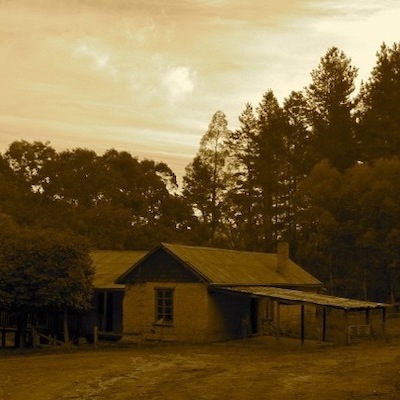
St Ernies Homestead
This building is significant as the farm homestead of early settler T.H. Parsons.
The isolated settlement was selected in the 1870's and is at the confluence of several tributaries of the Warren River.
It has also been associated with the Wheatley family and has a beautiful setting above a stream.
The name derives from the Parish Church of St Erney Landrake Cornwall.
A number of renovations have been made to the original mud-brick rooms.
Unfortunately, the historical St Ernies Homestead is now in a sad state of disrepair due to vandalism and a lack of interest by local and state governments to fund any restoration or management of the building.
To get to St Erney's Homestead drive 6km north along Wheatley Coast Road out from Quinninup, turn left at Parsons Road. Follow this gravel track for approximately 2.2kms and you will arrive at the old mud brick cottage.
In 1910 three room were built with substantial pise walls with a verandah and entrance on the north and skillion rooms on the south. The latter were replaced in 1945 by a large timber extension of four rooms, verandah, toilet, bedroom and a glass enclosed verandah on the west.
In recent years the cottage has been rented with a family living in it until about 2000. Unfortunately, it is now is a state of disrepair.
St Erney's is now on Department of Environment and Conservation land, set amongst state forest and pine plantation.
Return to Wheatley Coast Road via the same method along Parsons Road. Take care on all roads in the area as they are regularly used by trucks and heavy machinery.
Download the Heritage Council of WA Register of Heritage Places - Assessment documentation for St Erney's
Nature Walk Trails
Unique worldwide, the Karri and Jarrah forests of the South West of Western Australia are filled with a fascinating diversity of flora and fauna.
There are three walk trails to enable visitors to experience first hand the wonders of nature in our surroundings.
The Quinninup Eco info stand, (located next to the Community Centre) provides visitors with an extensive background to the area starting back in the Cryptozoic era, some 4,600 years ago, right up to the present day.
Situated: 150m from the corner of Wheatley Coast Road and Karri Lane
Distance: 4kms return (approx) - allow 1.5 hours
Difficulty: Easy to moderate - Class 3
Best: Late winter to late spring, July to November
Special Features:
The Karri Lake walk offers a relaxing, easy stroll and a must for all visitors to Quinninup. This walk offers a range of activities from bird watching to photography, with a variety of unique flora and fauna all year round.
Take your time to enjoy the tranquil setting, blow away the stresses of city life for a weekend or longer in the very special place that is Quinninup!
Situated: About 1.5kms east of Quinninup off Karri Lane, close to Rainbow Trout Retreat. Within Dordagup National Park
Distance: 4kms return (approx) - allow 1.5 hours
Difficulty: Easy to moderate - Class 3
Best: Late winter to late spring, July to November
Special Features:
This is a well-defined walk trail with some steep sections. A reasonable level of fitness is recommended. This trail follows the Little Quinninup Brook before taking you through the varied vegetation of Dordagup National Park and Tone State Forest.
As you walk, you’ll notice the distinct change in undergrowth from the tall karri forest to the more open jarrah forest. Both forest types boast an impressive display of wildflowers in season.
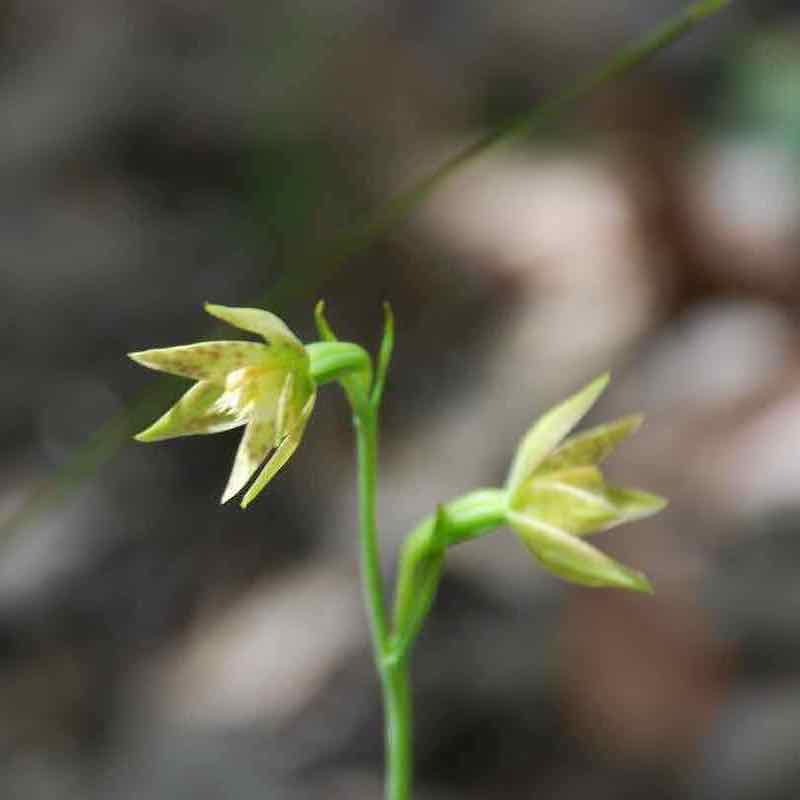
This area is known for the variety of orchid species that flower here in winter and spring – keep a lookout for spider, helmet, snail, flying duck, cowslip and bird orchids.
"Wow - that is a cracker of a trail! I saw 3 species of orchids and just about every wildflower that the karri and jarrah forest has to offer." - Bron DBCA
Situated: About 1km south of Quinninup, off Wheatley Coast Road. Within Dordagup National Park
Distance: 3.7kms return (approx) - allow 1.5 hours
Difficulty: Easy to moderate - Class 3
Best: Winter to Spring, June to December
Special Features:
This is a well-defined walk trail with some steep sections. A reasonable level of fitness is recommended. In the late 1980’s, the Quinninup community lobbied the government to protect this area from logging.
Their efforts resulted in the creation of Dordagup National Park in 2004. Some of the karri trees in this forest are truly enormous and are hundreds of years old.
This trail takes you through tall karri forest with a variety of colourful understory species such as clematis, tree hovea and coral vine. Karri Hazel lines the edges of this trail and can be recognised by its bright green leaves and tiny green-yellow flowers. The leaves contain saponin so, if you rub the leaves between your hands with a bit of water, you’ll end up with a lather similar to soap.
Printed maps are available from the Quinninup Community Postal Agency
Wed and Fri 3-5pm
Use your phone camera to download your FREE copy of our Walk Trail map and guide using this QR code.

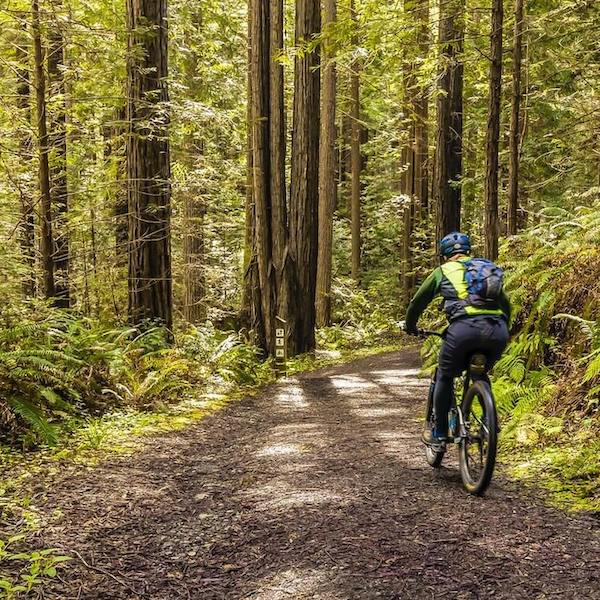
Munda Biddi Cycle Trail
The Munda Biddi Trail is fast becoming a first class nature-based off-road cycling experience and fast becoming a "World Top 10 Ride".
Munda Biddi means 'path through the forest' in the local Noongar Aboriginal language.
South-West WA is recognised as a global biodiversity hotspot where you will discover plants and wildlife found nowhere else.
There are few places in the world where a 1,000 km trail could be built through an undeveloped natural corridor of forests and bush land.
The trail passes through Quinninup's spectacular forest and rivers.


Ancient Bunya Tree
Even though it is native to Queensland and the wet tropics this rare example of the Bunya Pine has grown to enormous size here in the south-west of WA.
The fruit cone, which contains edible kernels, is the size of a football and splits when boiled or put in a fire. The flavour of the kernel is similar to a chestnut. This fruit is considered extremely important to indigenous Aborigines.
Ceremonial meetings including dispute settlements and fights, marriage arrangements and the trading of goods were conducted to celebrate the fruiting of these trees.
These celebrations were most likely Australia's largest indigenous event, diverse tribes – up to thousands of people – once travelled great distances to these gatherings. They stayed for months, to celebrate and feast on the bunya nut.
This ancient Bunya tree is located next to St Ernie's Homestead, (see above) drive 6km north along Wheatley Coast Road out from Quinninup, turn left at Parsons Road. Follow this gravel track for approximately 2.2kms and you will arrive at the old mud brick cottage and Bunya tree.
Araucaria bidwillii, the bunya pine, is a large evergreen coniferous tree in the genus Araucaria, family Araucariaceae.
The Bunya Pine is the last surviving species of the Section Bunya of the genus Araucaria.
http://en.wikipedia.org/wiki/Araucaria_bidwillii
Return to Wheatley Coast Road via the same method along Parsons Road. Take care on all roads in the area as they are regularly used by trucks and heavy machinery.
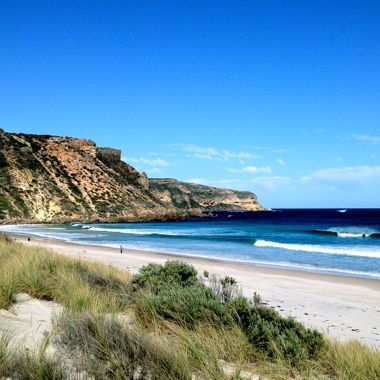
Windy Harbour & Beaches
Windy Harbour is a holiday settlement surrounded by D'entrecasteaux National Park.
A picturesque 45 minute drive via Northcliffe, it is the only two-wheel drive access to the south coast between Augusta and Walpole and provides visitors with spectacular scenery, a safe harbour on the rugged coast line and is famous for it's fishing.
About 220 cottages have been developed on individual leases since the early 1900's. Leasehold tenure, seasonal occupation and a strong community spirit have generated a settlement of unique character.
Long stretches of white sandy beaches with red stone cliffs make for a dramatic beach side break.
St Mark's Church
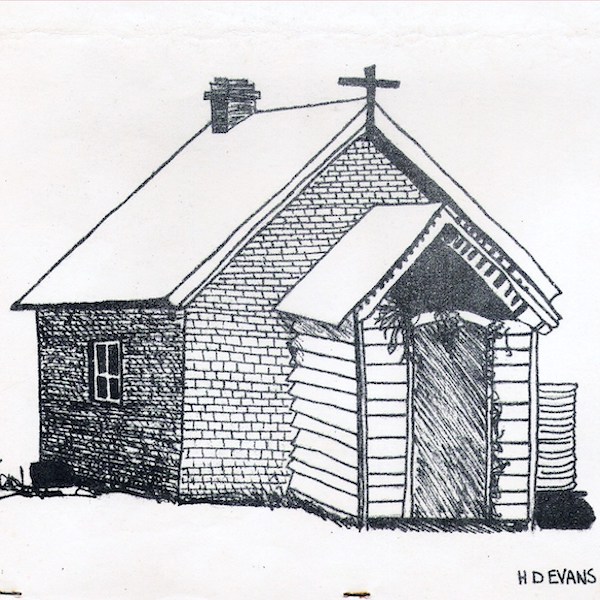
In the 1870’s early settler families Wheatley, Blechynden, Mottram, Hall and Clark commissioned local builder Jack Haines to construct a school and community building east of the Upper Warren Bridge near what is now the junction of Wheatley Coast Road and Muirs Highway.
It served as the district school and social centre.
In 1929 this building was dedicated as a church and in 1955 it was consecrated as the Upper Warren Church of Saint Mark. Several marriages have been recorded here.
St Mark`s Church was deconsecrated in January 2016 and is now located on private property.
Sadly, there is now no public access to St Mark's
RARE BIODIVERSITY
The South West is synonymous with wilderness, giant forests, and spectacular coastlines. This area also has many unique and endemic animals, like the Numbat and the Western Ringtail Possum.
The South West’s uniqueness along with its threats is what attracts the global hotspot status. This status is only awarded to places with extraordinarily high concentrations of endemic species, but also where these species are undergoing severe loss of habitat.
JARRAH AND KARRI FORESTS
Quinninup lies in the land of the giants, surrounded by karri trees - the tallest species in Western Australia and one of the tallest hardwoods on Earth.
In just under three and a half hours, you can drive south from Perth and arrive in the green serenity of Quinninup.
A staggering 80 percent of the Southern Forests region is dedicated to forest and national parks, so outdoor adventures and nature abound.
Rich soils, fresh water and straight timbers were the big drawcards that lured settlers to this area in the late 1800's.
Visitors are asked to please;
Whilst care has been taken to minimise risk, these sites and walk trails may be situated in state forest, plantation areas and old growth forests which are all subject to the dynamics of a living ecosystem. As such no liability is accepted by the QCA for any accident or injury.

Simply Beautiful
Jewel of the South West
© 2022 Quinninup Community Association Inc
ABN: 29 564 565 867 - IARN: A0824490U
The Quinninup Community Association acknowledges the Aboriginal and Torres Strait Islander People as the original custodians of this country, recognizing their connection to land, waters and community. We respect their cultures and Elders, past and present.
"Ngala kaaditj Pibelman Noongar moort keyen kaadak nidja boodja.”
We acknowledge Pibelman Noongar people as the original custodians of the land on which we live.
Images courtesy of: Fritz Nabholz | Mick Hill | Tom Chvojka | Wendy Eiby | Ian Grose | Scott Frankel © 'Quinninup Naturally' graphic and design by permission from RapidWebSites.